How a painting is made.
Classical oil painting is a layered process. Each stage builds on the last; nothing is rushed. What follows is a step-by-step account of how T. builds a painting from first pose to finished surface, illustrated through a single work made at the Barcelona Academy of Art.
Brainstorming
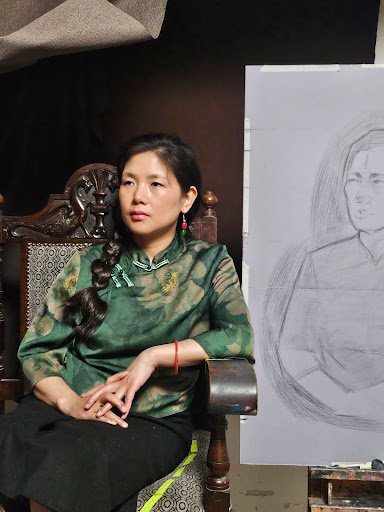
This painting started as a friendship. When I met Jie, I knew I wanted to paint her — and we planned the whole piece together: the clothing, the jewellery, the background colours, the mood. We settled on earth tones, warm and grounded, an invitation to be still. We tried many poses before landing on one that held something I already saw in her: confidence and quiet poise, together.
Underdrawing
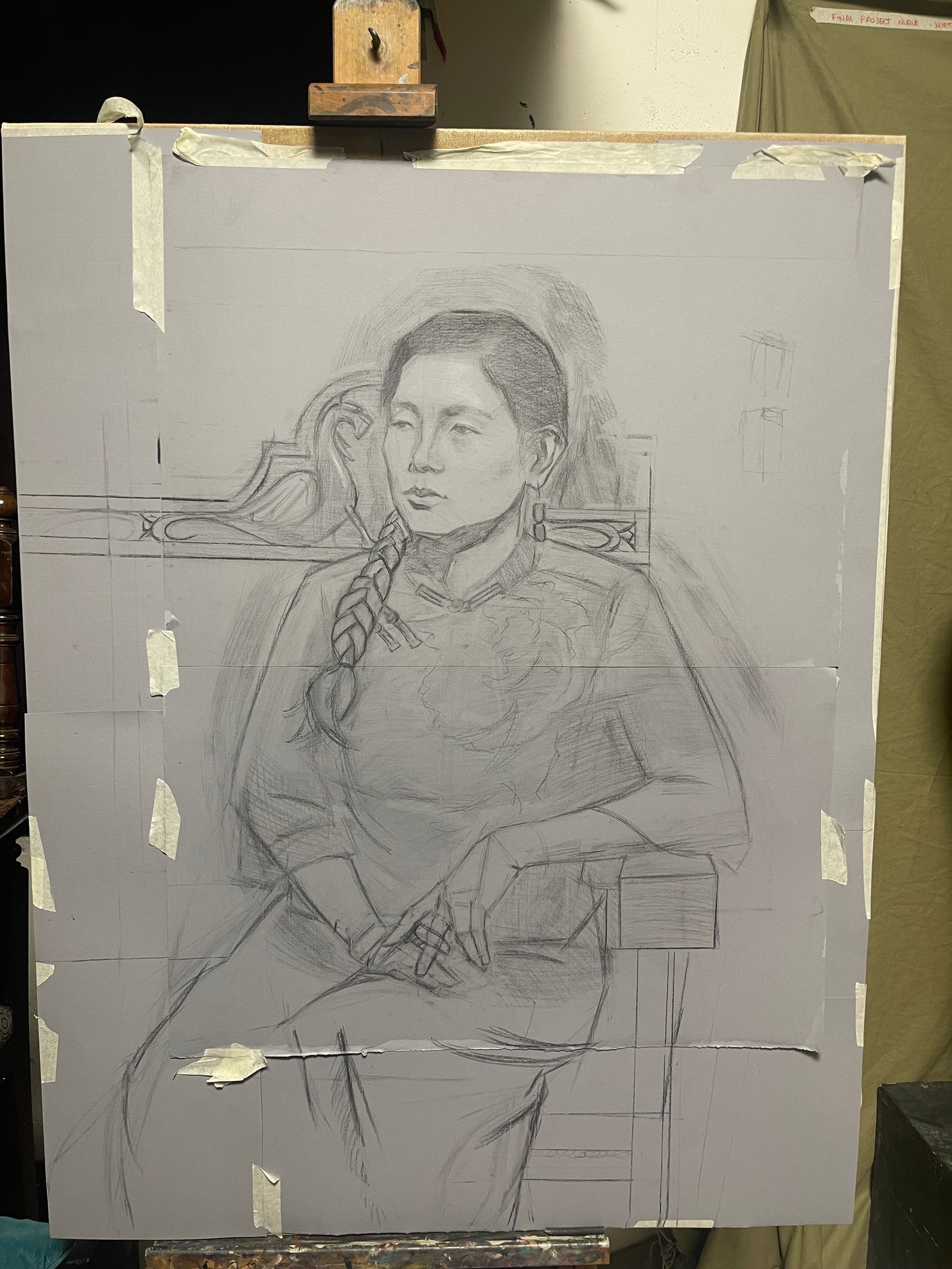
Composition comes before colour. I made thumbnail sketches to work out the balance of the piece before committing to canvas, testing where the eye should land and where it should travel. The final arrangement gives more space on the side she looks toward, and her clasped hands draw the gaze back inward. These decisions, made in pencil, shape everything that follows.
Colour Studies
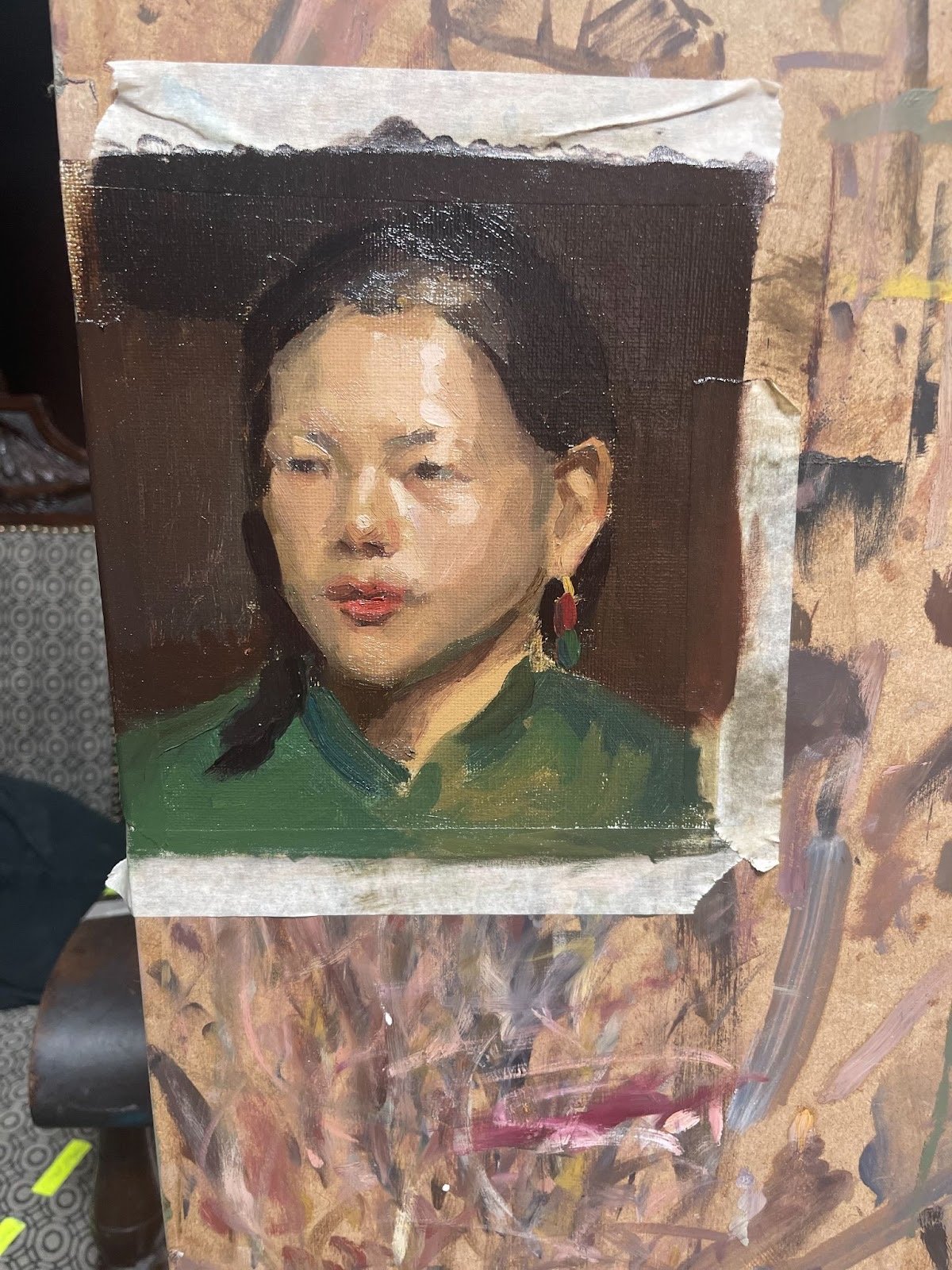
Before touching the large canvas, I painted two small studies — one of the portrait alone, one of the full composition. Working small forces decisions. I premixed my entire palette from these studies and referred back to them throughout the painting. Taking that time was not a delay; it was the reason the large work could begin with confidence.
Initial Layer
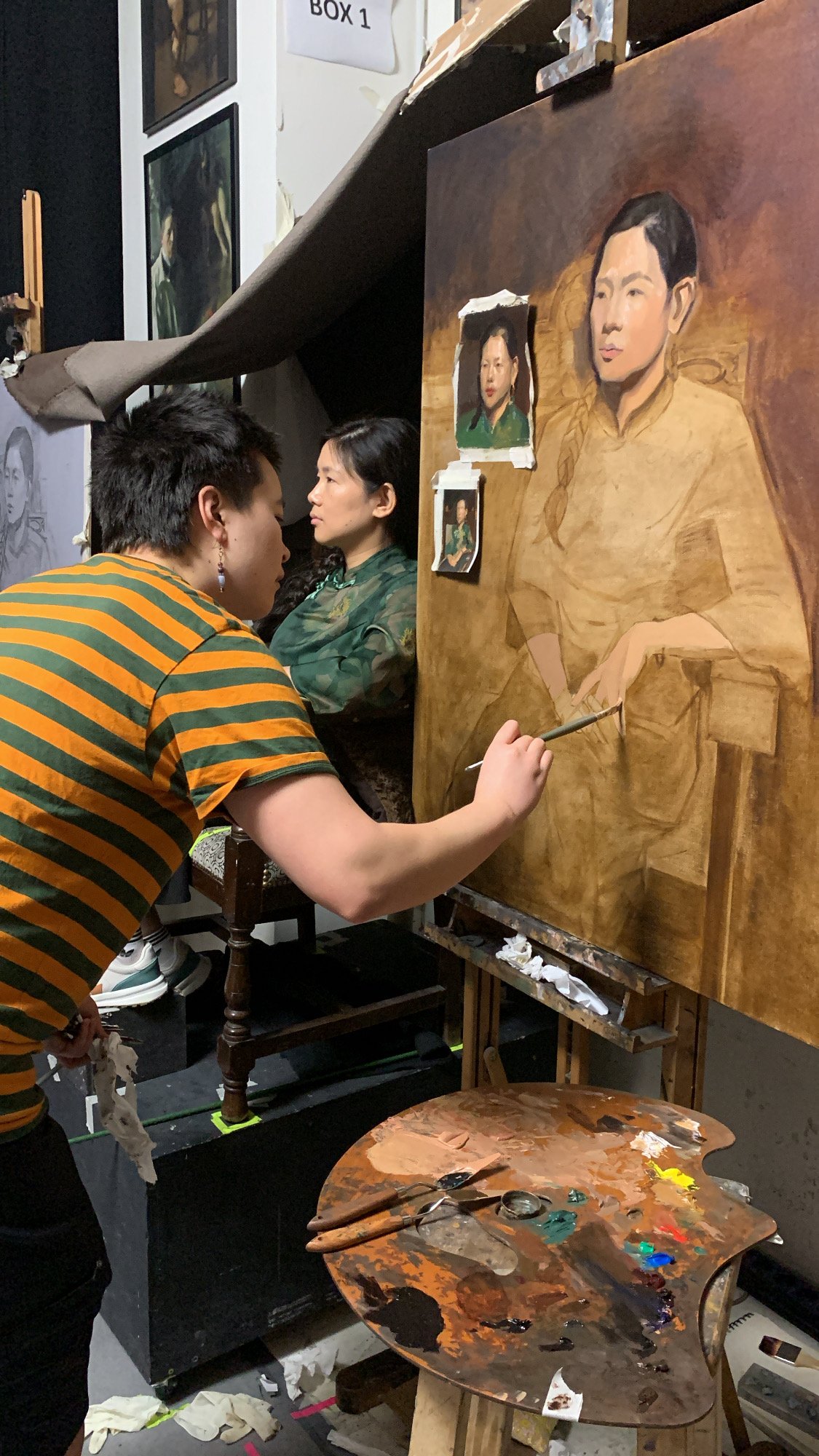
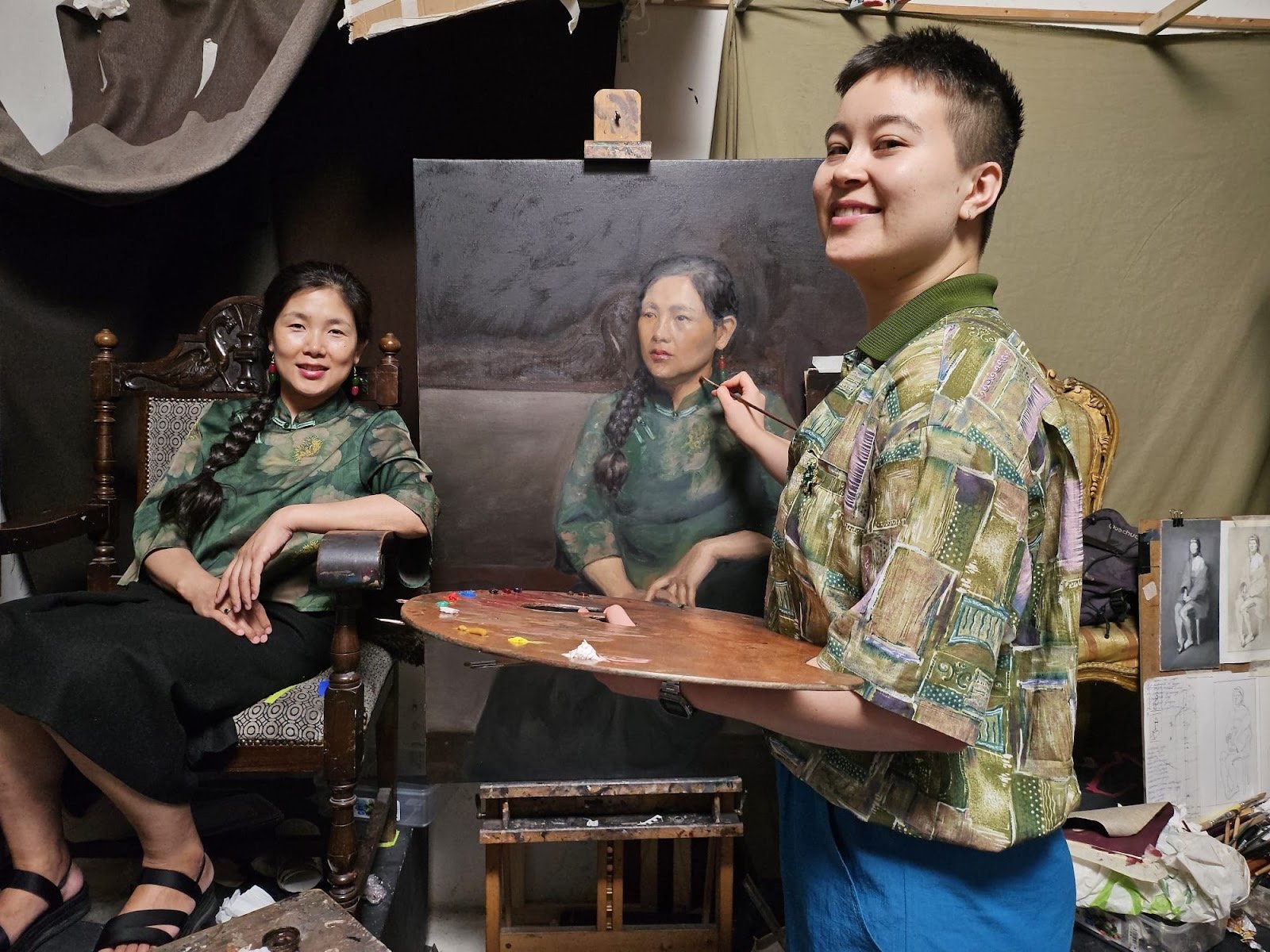
The painting began in earnest. Starting with the background, then the figure, I worked slowly across the canvas, filling the composition while holding onto the drawing underneath. Patience here is not optional — a careless first layer can undo hours of preparation. The painting at this stage looks unresolved. That is correct. Everything is still to be built.
Colour Layers
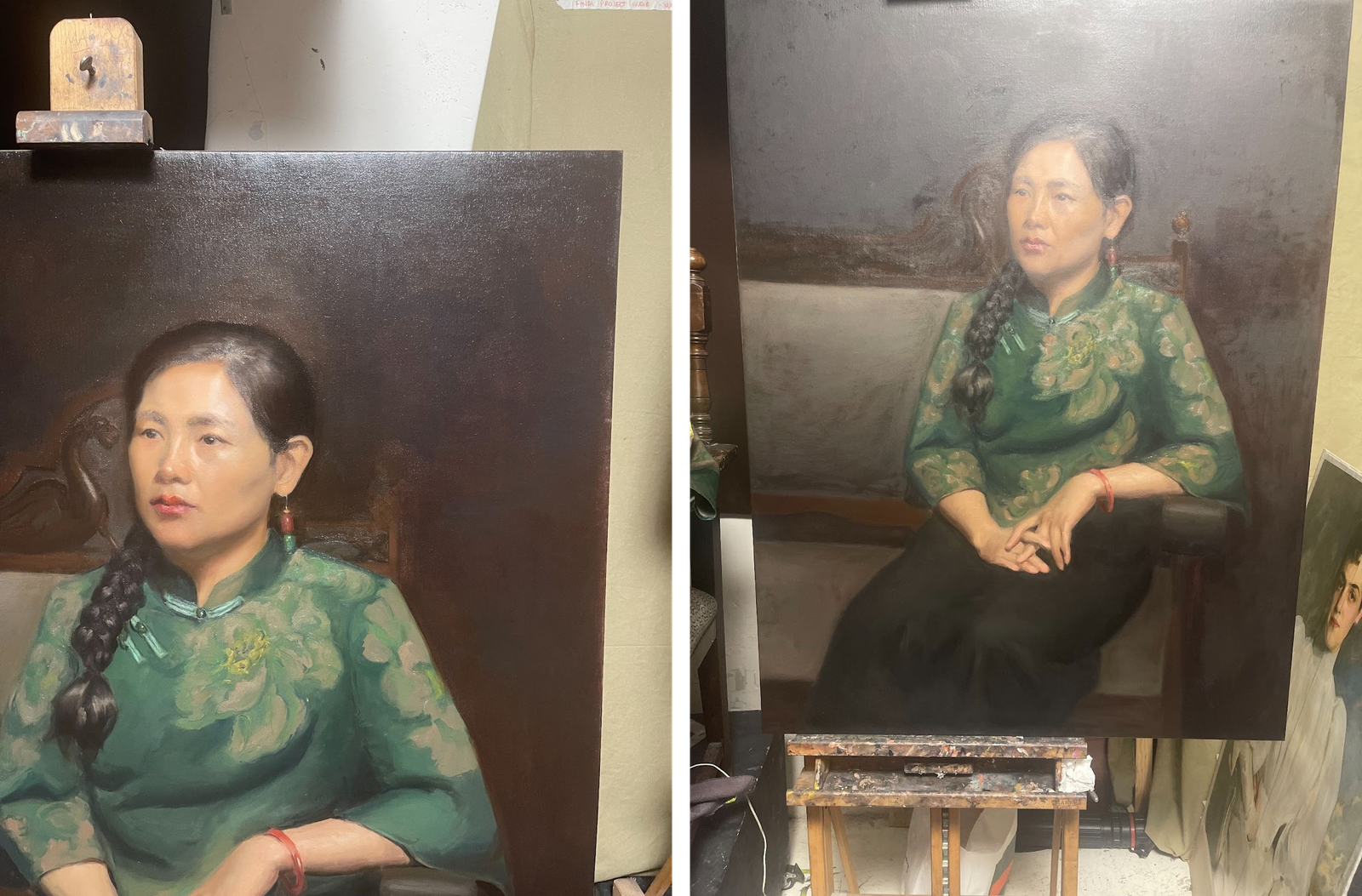
Subsequent layers bring the painting into focus. Values are calibrated, drawing is refined, paint is built up where the surface needs weight — the hands, the face, the folds of the fabric. Colour moves across the whole work, each passage informed by what surrounds it. Some areas, like the shirt and bench, held out to the end. A painting teaches you where it wants to go.
Glazing
The final work happens in glazing. Thin, transparent layers of oil-thinned paint drift over dried passages, enriching colour and softening transitions in ways opaque paint cannot. It is slow work — each glaze shifts the surface slightly, and the shifts accumulate. The painting stops when it stops asking for more. What remains is the record of everything that came before: the drawing, the studies, the patience, the layering. Held now in the surface of the paint.
Want to learn these techniques, commission a work, or see more of the finished paintings?